Wednesday, August 19, 2015

Condemning ISIS Atrocities Against Syria's Dr. Khaled al-Asaad


Dr. Khaled al-Asaad. Photo Source: The Guardian
The Antiquities Coalition strongly condemns the recent murder by ISIS of the world renowned scholar, Khaled al-Asaad.  Dr. al-Asaad died protecting the very history that he has worked his whole life to excavate and conserve. His pioneering work in Syrian archaeology led to uncovering the treasures of Palmyra's rich past for Syria and the rest of the world to enjoy.  This deplorable action is yet another aspect of ISIS' continuing campaign to use cultural heritage as a means to intimidate those that practice different faiths and share different ideologies.  It is important that the international community stand together in the fight against cultural terrorism and cultural cleansing.  Our heartfelt condolences go out to the Dr. al-Asaad's family, friends and colleagues.

Wednesday, August 12, 2015

Remembering Barbara Mertz

By: Deborah Lehr

2015-08-06-1438867505-1761156-unnamed1.jpg

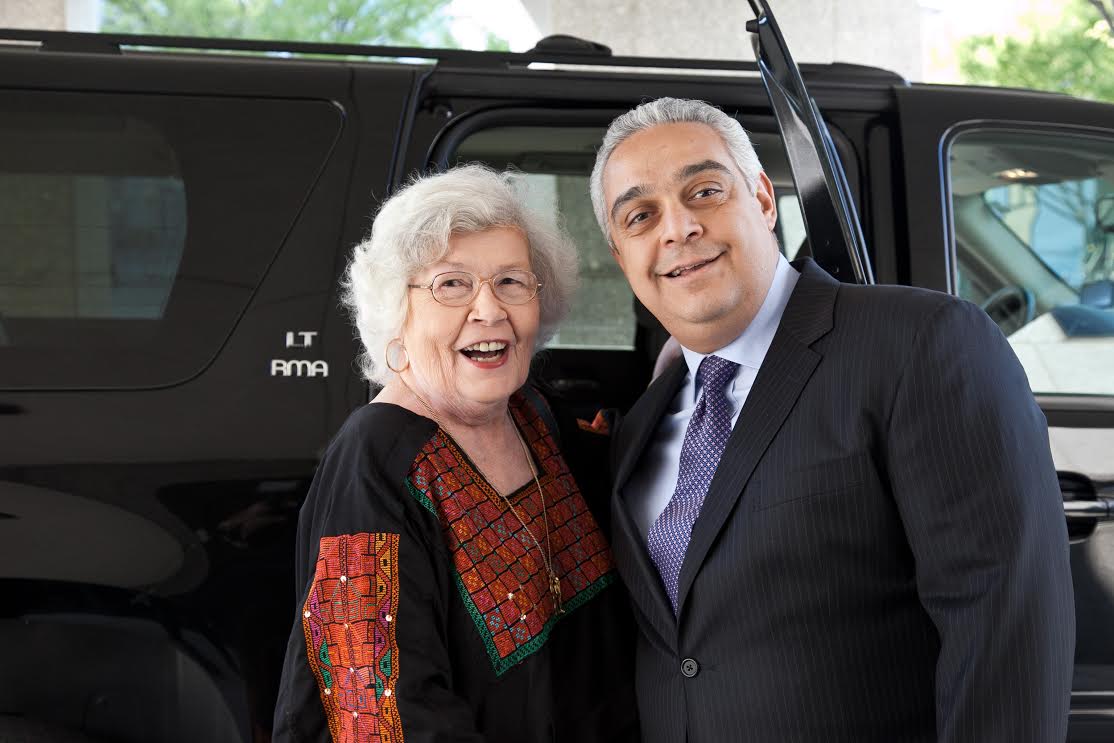
Dr. Barbara Mertz and Amb. Yasser el Naggar at the Egyptian Embassy
Two years ago this week, the prolific best-selling author and dedicated Egyptologist Barbara Mertz, fondly known by her pen name Elizabeth Peters, tragically passed away, from cancer. Dr. Mertz was a true trailblazer -- both as a writer of popular fiction and as a serious scholar.

At the young age of 25, she obtained her doctorate in Egyptology from the renowned Oriental Institute at the University of Chicago, but struggled to find work at a time when women were viewed as secretaries, not scholars. So Dr. Mertz, a freshly minted, brilliant archaeologist chose a different career path. She picked up a pen and began writing fiction, where she achieved tremendous success. Ironically, it is through her writings that she has educated more people about archaeology, the history of Egypt and its meaning to the world than she ever would have as an archaeologist.

Dr. Mertz's most beloved series is about the adventures of Ms. Amelia Peabody and her loving but fierce Egyptologist husband, Dr. Radcliff Emerson. Amelia and Emerson, as he is known, entertain readers as they fight against antiquities traffickers who are robbing archaeological sites and selling antiquities into international markets. Rich collectors, museums and auctions houses are all part of the intrigue -- and, in many cases, they are the clients of the "Master Criminal, Black Hand" who is behind many of these capers. Through her storytelling, Mertz brings to life the excitement of that golden age of archaeology, sharing gripping, true-to-life exposés of the founding of King Tut's tomb and the political theatrics of the time between the European and Egyptian governments. Her stories illuminate Egyptian history vividly, with lavish and mysterious dinners hosted by princes and a queen in Sudan, travels back in time to an intact ancient Meroitic-Ancient Egyptian civilization, and many more adventures.

In addition to popularizing the history of Egypt through her novels, Mertz also used her platform to raise awareness about a persistent problem that continues to this day - cultural racketeering. This systematic looting of antiquities by organized crime, or, in modern times, by terrorist organizations such as ISIS, has increased severely in the Middle East since the Arab Spring.

Dr. Mertz was a vocal advocate against the trafficking of illicit stolen antiquities from her cherished Egypt. Just after the January 2011 Revolution in Egypt, when reports of mass looting of key archaeological sites started flooding in to the archaeological community, Dr. Mertz was part of a "call to action" requesting the U.S. government to take proactive measures to prevent U.S. citizens from inadvertently supporting these criminal activities by purchasing looted antiquities.

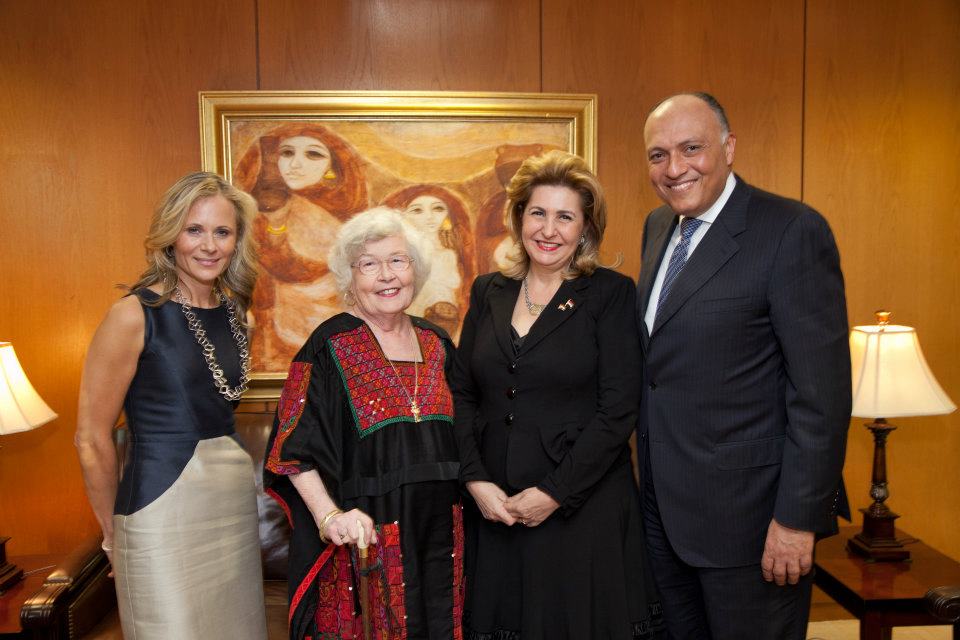
Dr. Mertz was highly respected and admired in the antiquities community. In a moving presentation at the Egyptian Embassy on April 14, 2011, Judy Woodruff, the PBS news anchor, interviewed Dr. Mertz about her experiences, her novels and her love for Egypt's past. At an event sponsored by the Antiquities Coalition and the Egyptian government, The Egyptian Deputy Chief of Mission and now the Deputy Minister for Investment, Yasser el Naggar, served as her host. Ambassador el Naggar has become a strong voice about the importance of protecting Egypt's past and fighting against antiquities thieves and terrorists. The Egyptian Ambassador at the time, who is now Egypt's Foreign Minister, Sameh Shoukry, introduced Dr. Mertz at the event. Minister Shoukry has been an active supporter of the fight against antiquities trafficking in the Middle East region, and views this as a critical part of Egypt's war against terror, since organizations such as ISIS are using the sale of these looted antiquities to fund their nefarious causes.

2015-08-06-1438867619-2003541-426156_360397580644817_1587447283_n1.jpg
Deborah Lehr, Dr. Barbara Mertz, Mrs. Shoukry, Ambassador Shoukry
Elizabeth Peters, the fiction writer, is still missed by those longing to read another mystery novel about Amelia Peabody and Radcliff Emerson. Peters tragically died while writing another one of their adventures. Yet her creator, Dr. Barbra Mertz, continues to influence those she has inspired, including myself, to fight against those who would use theft of our history to rob future generations of their past. Her recognition by the Egyptian government is a reminder that one individual can truly make a difference. 

And for that, we fondly salute Dr. Barbara Mertz, aka, Elizabeth Peters, on this two-year anniversary of her death. May she rest peacefully with the assurance that we will continue to honor her legacy in our fight to preserve Egypt's past -- and protect our future.

 This piece was cross posted on The Huffington Post.

Tuesday, August 11, 2015

Statement by the Permanent Representative of Italy to the United Nations, Ambassador Sebastiano Cardi On Cultural Racketeering

The Italian Mission to the United Nations has now posted the full statement of its Permanent Representative, Sebastiano Cardi, from the roundtable discussion hosted by Italy and Jordan on June 3rd.

"Countering Destruction of and Trafficking in Cultural Property: From Lessons Learned to Implementation" brought together international experts from government, law enforcement, and the nonprofit sector — including  the Antiquities Coalition, the Carabinieri, INTERPOL, the United Nations Educational, Scientific, and Cultural Organization (UNESCO), and the United Nations Office on Drugs and Crime (UNODC).

Below are the full remarks of H.E. Ambassador Cardi, a career diplomat with over three decades of service in Italy and abroad, who has been a tireless advocate for heritage preservation:


At the outset, I thank the Permanent Mission of Jordan and Ambassador Dina Kawar and the UNESCO Office in New York for joining us in promoting and organizing this event. Your cooperation and input have been extremely helpful. 
A sincere thank you and a welcome to all the panelists who have accepted our joint invitation. We look forward to hearing your thoughts, and to the interesting debate we know we can expect from the floor in the second half of the meeting. 
The response we have received to this event attests to the prominence of this issue on the international agenda. There is indeed a need for enhanced cooperation among States and institutions to counter what the Director General of UNESCO has rightly called an outbreak of “cultural cleansing.”
As the concept note for today’s event points out, there has been a recent spike in the barbaric destruction of and terrorist attacks on the cultural heritage of countries affected by armed conflict. This, together with the unprecedented scale of organized looting and illicit trafficking in cultural objects. Such crimes seek to erode our collective cultural and historical heritage and are being used to intimidate populations. In addition, these acts are meant to generate income for terrorist groups, to support their recruitment efforts, and to strengthen their operational capability to organize and carry out terrorist attacks. 
This risk is particularly high in the Middle East and in the Mediterranean – although not limited to these regions – where the multiethnic and multi-religious character of the societies is under severe threat. As a close friend and member of the region, Italy is a staunch believer in preserving inclusiveness and diversity and is ready to deploy the necessary political and practical tools to address this challenge through international cooperation. 
Today’s roundtable offers the panelists an opportunity to discuss innovative and practical ways to protect and preserve cultural heritage. We will also be briefed by UNESCO, INTERPOL, the Italian Carabinieri, UNODC, and other experts on practical measures for addressing this threat and implementing the established international legal framework. 
In 1969, Italy became the first Country in the world to create a police division specialized in the protection of cultural heritage and the fight against illegal trafficking of cultural property. Building on this experience, we are very active in this field at both the political and the technical levels, as you will hear shortly from a representative of the Carabinieri corps.
Allow me to mention some of our political initiatives. 
In the framework of the Anti-ISIL Coalition, Italy is co-chairing with the USA and Saudi Arabia the “Counter ISIL Finance Group,” whose aims include promoting swift implementation of UNSCR 2199 (co-sponsored by Italy). 
This Group has already met twice: the first time in Rome in March and then in Gedda at the beginning of May. In Rome the members of the Group adopted an action plan with concrete proposals to counter ISIL/DAESH’s economic sustainability. The Action Plan identifies four main areas of enhanced cooperation: 1) prevent ISIL’s use of the international financial system; 2) counter the extortion and exploitation of economic assets and resources that transit, enter, or are derived from ISIL-held territory; 3) deny ISIL funding from abroad; and 4) prevent ISIL from providing financial or material support to foreign affiliates in an effort to expand its global ambitions. 
It was at Italy’s request that reference was made in the action plan to countering the smuggling of archeological and cultural goods. During the second meeting of the Group, held in Gedda, three sub-groups were established to pursue specific items of the action plan and devise operational proposals. Italy will be chairing the sub-group on illegal trafficking in cultural property. 
The sub-group will provide investigative cooperation in detecting international smuggling routes and foreign facilitators, middlemen, or buyers, and in tracking down stolen or looted cultural property, including archaeological objects. It will also support and enhance implementation of the INTERPOL’s international database, in order to facilitate identification and recovery of cultural and archeological goods, also by strengthening existing tools such as the Protection System for Cultural Heritage (PSYCHE) project. 
Three final remarks. First, our national action is expressed most prominently at the UNESCO headquarters in Paris, and we appreciate DG Bokova’s participation in yesterday’s meeting of the anti-Daesh Coalition and the proposals she made during the meeting. At the initiative of Italy and Spain, in April the UNESCO Executive Board adopted resolution 196 on culture in areas of conflict. The resolution underlines that damage to the archaeological, historical, cultural and religious tangible and intangible heritage constitutes damage to the cultural heritage of humanity as a whole, and that, according to international law, intentional attacks on buildings dedicated to religion, education, art, science or charitable purposes and historic monuments may be considered a war crime. 
Second, it is time to translate into practice the 28 April resolution on the protection of cultural items in Iraq. 
The last one is on accountability, fighting impunity and promoting justice. As Vice President of the Assembly of State parties of the International Criminal Court, allow me to recall the importance of prevention through justice. 
Protecting the cultural heritage and integrating the cultural dimension into the prevention and settlement of conflicts is not only an emergency measure: it is also a political and security imperative. I am confident that today’s event will contribute to our common cause. 
Thank you.

Wednesday, August 5, 2015

The Asia Society Announces September Summit with the Antiquities Coalition to Tackle Cultural Racketeering

Press Release from the Asia Society


NEW YORK, August 4, 2015 — Asia Society is pleased to join UNESCO, the Antiquities Coalition and the Middle East Institute in a special high-level forum in New York City on September 24, 2015 titled “Culture Under Threat: The Security, Economic and Cultural Impact of Antiquities Trafficking and Terrorist Financing.”

The forum is part of a major new initiative to find regional solutions to the recent surge in the destruction and looting of antiquities across the Middle East. UNESCO Director General Irina Bokova, His Excellency the Foreign Minister of Iraq Dr. Ibrahim Al-Jaafari and Asia Society Policy Institute President Kevin Rudd will deliver remarks. Asia Society President Josette Sheeran and Antiquities Coalition Chairman Deborah Lehr will serve as co-chairs and hosts of this historic event, which will feature delegations from the nations most affected by the theft and destruction of these treasures, as well as the heads of leading cultural organizations. The forum will feature the keynote addresses, public discussion, and a private dialogue to chart action for the future. All events will be held from 8:30am-11:30am at Asia Society, 725 Park Avenue in New York.

It has been a time of particular turmoil in the Middle East. While the loss of human life resulting from instability is tragic, so are the attacks by militants and organized criminals on local cultures, and the damage done to some of the great treasures of antiquity. The destruction of historic sites and looting of antiquities are now widespread across the Middle East, from Egypt to Iraq to Syria and Libya – the region on which the foundations of human civilization were laid. These attacks constitute a form of “cultural terrorism” – indeed some are calling them “war crimes” – and the illicit trafficking of these antiquities is being used to fund the causes of terrorist and criminal networks.

What can leaders in the region, international agencies, and the heads of global cultural organizations do to reverse these attacks against our shared history and heritage? This gathering will focus on answers that question – whether they involve diplomacy or law enforcement, education or military action, or some combination. The forum will convene the finest minds and most effective policymakers to the table, to at least begin to find answers to this pressing global problem.

Beyond the guests listed above, among those already confirmed for the “Culture Under Threat” forum:

Ahmed Abdulkariem, Chairman, Department of Antiquities, Libya; Roger Bagnall, Leon Levy Director, Institute for the Study of the Ancient World, New York University; Anita Difanis, Director of Government Affairs, Association of Art Museum Directors; Amy Freitag, Executive Director, J.M. Kaplan Fund; Charles J. Henry, President, Council on Library and Information Resources; Josh Knerly, Partner, Hahn, Loeser & Parker; Amy Landau, Associate Curator of Islamic and South Asian Art, The Walters Art Museum; Edward Liebow, Executive Director, American Anthropological Association; Ken Lustbader, Program Director of Historic Preservation, J.M. Kaplan Fund; David MacKay, Partner and Head of U.S. Operations, Portland Communications; Emily K. Rafferty, President Emerita, Metropolitan Museum of Art; Maggie Salem, Executive Director, Qatar Foundation International; Patrick Sears, Executive Director, Rubin Museum of Art; Brigadier General Hugh Van Roosen, Director, Institute for Military Governance (IMSG), U.S. Army John F. Kennedy Special Warfare Center and School; and Karol Wight, President and Executive Director, Corning Museum of Glass.

“Culture Under Threat” will build on issues raised at a conference in Cairo in May, 2015, at which officials from the Middle and Near East pledged to take several initial steps:

• The creation of a “Cultural Racketeering Task Force” consisting of senior representatives from various countries to coordinate regional and international efforts to protect cultural property and prevent smuggling and repatriate stolen artifacts;
• The establishment of an International Advisory Committee to provide advice and support for the task force on ways to fight cultural destruction and illicit trafficking;
• The launch of an awareness campaign in so-called “demand countries” to discourage purchases of looted antiquities;
• Various possible regional and international partnerships to address various aspects of the problem.

For further information about this event, contact pr@asiasociety.org.

Tuesday, June 23, 2015

Introducing the Antiquities Coalition’s New Video Series, “Culture Under Threat: Terrorism and Profiteering”

The Antiquities Coalition is launching our first video series! Titled, “Culture Under Threat: Terrorism and Profiteering,” it features international experts offering solutions to and analysis of the looting crisis, illicit antiquities trade, and its connection to terrorism. The series is premiering today on the Antiquities Coalition’s website at theantiquitiescoalition.org.

The Antiquities Coalition’s recent Cairo Conference brought together an unprecedented group to tackle cultural racketeering

and terrorist financing. Ministers from ten Middle East and North African countries, international experts, and our co-hosts from the Middle East InstituteUNESCO, and the Arab Republic of Egypt convened to seek solutions and discuss implementation of a comprehensive plan to confront the depredations caused by terrorist and criminal syndicates across the MENA region. The result was the Cairo Declaration, an agreement signed by all ten countries that commits them to a joint effort to stop terrorist funding and cultural destruction.

The “Culture Under Threat” videos were shot at the Cairo conference and feature top international experts, including UNESCO Director General Irina Bokova, Egyptian Minister of Antiquities Mamdouh Eldmaty, and Antiquities Coalition Chair Deborah Lehr. The series begins with Iraqi Minister of Tourism and Antiquities, Adel Fahad Shershab, who puts the crisis in a global context, reminding the world that an international response is required to help Iraq stop the threat from the so-called Islamic State.

The Antiquities Coalition will publish new videos in the series weekly to our website and YouTube channel. To subscribe to this free series — and be kept informed of upcoming Antiquities Coalition events — please email CultureUnderThreat@theAntiquitiesCoalition.org.


Saturday, June 6, 2015

Turning Global Resolve Into Global Action: The Antiquities Coalition Joins UN Ambassadors for Emergency Roundtable in New York

"Unanimous" doesn’t happen easily or often in the 193-member UN General Assembly.

It did last week when the United Nations unanimously adopted a resolution condemning ISIS’ barbaric destruction and looting of the cultural heritage of Iraq.

Ambassador Mohamed Alhakim, the sophisticated and determined representative from Iraq, is the force behind this new effort at the United Nations.  In an impressive act of multilateral diplomacy, he shepherded a strongly worded resolution through the challenging UN process, declaring ISIS’ intentional destruction of culture a “tactic of war” and calling on all nations to join together to fight against the erasure of our common heritage.  

UNESCO Director-General Irina Bokova said the resolution represents a "turning point" in the mobilization of the international community against the destruction of cultural heritage.

UN Deputy Secretary-General Jan Eliasson said the coordinated action, improved information sharing and legal action would start to slow the tide of senseless extremism against the past, present and future of human civilization.

Following the resolution, to further turn global resolve into global action, Italy and Jordan’s UN ambassadors brought colleagues together with experts from the Antiquities Coalition, UNESCO, the United Nations Office on Drug and Crime, Interpol and the Carabinieri, the famed Italian police force who are world leaders in cultural law enforcement.  

Antiquities Coalition chair Deborah Lehr, also invited to attend, said “We are facing a crisis that requires the political will on behalf of each country to come together to seek solutions.  There are practical steps that countries can take individually and together to help stop this illicit looting.”

Countries as diverse as Poland, Ghana, Hungary, Mali, Russia and the United States spoke out in unity behind the need for action.  Ambassadors shared lessons learned from the destruction of culture in their own countries and how they might be relevant when facing today’s issues.  The representative from Turkey, the major transshipment point for illicit antiquities from Syria and Iraq, said her country is now strengthening protections at its borders, increasing training for its customs officers and alerting museums, dealers and others purchasers that they will take strong action against those who are dealing in looted antiquities.

ISIS seems to have taken notice.  They boasted, in a page right out of Nazi history, that they will now destroy “only” antiquities which present a world view other than their own. They even named a sham “antiquities minister.”

We are not fooled. The world is not fooled.  The world must not – will not — allow this cultural genocide-for-profit to continue.  Declaring intent in Cairo, upping that to unanimous global resolve at the UN and following up with pledges of international action are a launching pad to slow ISIS funding and neutralize one reason for the terrorists’ barbarous acts. 

The world is showing ever-increasing and unanimous resolve: ISIS destruction, intimidation and profiteering will not be allowed to stand.


Monday, May 25, 2015

2015 Cairo Conference: Cultural Property Under Threat

TEN MIDDLE EAST AND NORTH AFRICAN COUNTRIES ANNOUNCE CAIRO DECLARATION, TAKE STEPS TO PREVENT THE WAR CRIME OF LOOTING AND THE DESTRUCTION OF HERITAGE

As the Islamic State continued its march of destruction across Iraq and Syria, ten Ministers from Middle East and Northern Africa countries joined together at the Cairo Conference on May 13-14 to announce an action plan in the fight against culture under threat. 

The issuance of the Cairo Declaration, the first communiqué of its kind in historic preservation, commits these ten countries to specific actions that will help protect and preserve their priceless artifacts as well as raise awareness globally about the plight of conflict antiquities. The Arab State of Egypt hosted this event as part of its critical campaign in the fight against religious extremism.  The Antiquities Coalition is proud to be a partner in this initiative.

During the opening remarks, the four conference sponsors emphasized the urgent nature of the threat, and called for swift action.  Irina Bokova, Secretary General of UNESCO, called these attacks against heritage  “a Crime of War.” Egyptian Minister of Antiquities Mahmoud el-Damaty highlighted the organized aspects of the antiquities looting and how Egypt had suffered since the January 2011 revolution. 

Wendy Chamberlin, chairman of the Middle East Institute, noted the important role that non-governmental organizations can play in supporting countries during a time of crisis such as the one occurring in heritage.  Finally, Deborah Lehr, Chairman of the Antiquities Coalition, stated, “These extremists are using attacks against culture as a means to intimidate those who enjoy beliefs and histories that differ from their narrow and radical religious interpretations, as well as to fund their nefarious causes.  Together, we are stronger than being alone.  We seek solutions – not just discussion of the problems.”

Over twenty leading experts from heritage law, counter terrorism, law enforcement, archaeology international organizations, and regional specialists also participated to share their experiences with the Ministers and their delegations. General themes emerged from the discussions with the experts and countries. 

These themes included:

·      Sense of Urgency:  the destruction and looting of antiquities by terrorist organizations and criminal networks creates a crisis that requires immediate action from the region as well as from the international community

·      Regional approach:  countries agreed on the need to address the threat as a region, not just as individual countries.

·      More than war zones:  the crisis extends beyond Iraq/Syria to most of the countries in attendance.  Solutions need to address those not just in immediate crisis, but also under attack by criminal organizations and cultural racketeers.

·      Awareness raising:  public awareness campaigns should be launched.  Internationally, to link purchases of illicit antiquities from the region to terrorist financing and in Cairo Conference countries to help the local communities understand the importance of protecting heritage, especially training for children.

·      Use of international and domestic law: several countries voiced concern about the provisions of existing law to address heritage protection in times of crisis.  While there was no consensus around calls for a new international convention, there was general agreement that the international provisions need to be strengthened and clarified to find ways to better help countries facing a crisis in heritage.

A task force is being established immediately to being implementation of this historic agreement.  The Antiquities Coalition and its partners will be an important collaborator in this effort.